
| ROLE/ORGANISATION | NAME | CONTACT DETAILS |
|---|---|---|
| Designated safeguarding lead (DSL) | Jane Pickerden | 07907-716211 |
| DDSL | Jenny Haylock | 07738-906819 |
| Local authority designated officer (LADO) | Richmond: | 07774-332675 |
| Chair of Trustees | Ali Newman | Via; 0208 744 1733 |
| Safeguarding Trustee | Andrew King | Via; 0208 744 1733 |
The Purple Elephant Project aims to ensure that:
This policy sets out how the board of trustees is carrying out its statutory responsibility to safeguard and promote the welfare of children in accordance with Section 175 of the Education Act 2002.
The Purple Elephant Project fully recognises its moral and statutory responsibility to safeguard and promote the welfare of all children. This Safeguarding and Child Protection Policy is one of a range of documents that set out the safeguarding responsibilities of the charity. We wish to create a safe, welcoming and vigilant environment for children where they feel valued and are respected.
Safeguarding information is published throughout the charity documents and on the website to ensure children and adults know they can talk to charity–trusted key adults, and how to raise concerns they may have.
We recognise that the charity may provide the only stability in the lives of children who have been abused or who are at risk of harm. We are aware that the behaviour of a child in these circumstances may range from that which is perceived to be normal to aggressive or withdrawn.
We are able to play a significant part in the prevention of harm to our children by providing them with good lines of communication with trusted adults and an ethos of protection.
Wherever the word “staff” is used, it covers all staff on site, including self-employed staff, contractors, volunteers and trustees. It seeks to set out the principles and procedures we operate to protect children from harm. This policy provides information regarding our safeguarding responsibilities and details how these responsibilities should be carried out.
This policy will be updated as and when required and annually as a minimum. This may require our policy to be published ‘pending Trustee ratification’.
This policy is based on the Department for Education’s (DfE’s) statutory guidance Keeping children safe in education 2025 and Working Together to Safeguard Children (2023), and the Governance Handbook. We comply with this guidance and the arrangements agreed and published by our 3 local safeguarding partners (see section 3).
This policy is also based on the following legislation:
Safeguarding and promoting the welfare of children means: providing help and support to meet the needs of children as soon as problems emerge
Child protection is part of this definition and refers to activities undertaken to protect specific children who are suspected to be suffering, or likely to suffer, significant harm. This includes harm that occurs inside or outside the home, including online.
Abuse is a form of maltreatment of a child and may involve inflicting harm or failing to act to prevent harm. Appendix 1 explains the different types of abuse.
Neglect is a form of abuse and is the persistent failure to meet a child’s basic physical and/or psychological needs, likely to result in the serious impairment of the child’s health or development. Appendix 1 defines neglect in more detail.
Children include everyone under the age of 18.
The following 3 safeguarding partners are identified in Keeping Children Safe in Education (and defined in the Children Act 2004, as amended by chapter 2 of the Children and Social Work Act 2017). They will make arrangements to work together to safeguard and promote the welfare of local children, including identifying and responding to their needs:
Victim is a widely understood and recognised term, but we understand that not everyone who has been subjected to abuse considers themselves a victim or would want to be described that way. When managing an incident, we will be prepared to use any term that the child involved feels most comfortable with.
Alleged perpetrator(s) and perpetrator(s) are widely used and recognised terms. However, we will think carefully about what terminology we use (especially in front of children) as, in some cases, abusive behaviour can be harmful to the perpetrator too. We will decide what’s appropriate and which terms to use on a case-by-case basis.
Some children have an increased risk of abuse, both online and offline, and additional barriers can exist for some children with respect to recognising or disclosing it. We are committed to anti-discriminatory practice and recognise children’s diverse circumstances. We ensure that all children have the same protection, regardless of any barriers they may face.
We give special consideration to children who:
Safeguarding and child protection is everyone’s responsibility. This policy applies to all staff, volunteers and trustees in the charity and is consistent with the procedures of the 3 safeguarding partners. Our policy and procedures also apply to extended off-site activities.
All charity staff, (this includes staff, therapists and volunteers) will:
All charity staff will be aware of:
Our DSL is Jane Pickerden, Head of Therapy Services. The DSL takes lead responsibility for child protection and wider safeguarding in the charity. This includes online safety and understanding our filtering and monitoring processes on charity devices.
The DSL is available during opening hours for staff to discuss any safeguarding concerns, via email or phone. When the DSL is absent, the deputy (DDSL) will act as cover.
The DSL will be given the time, funding, training, resources and support to:
The DSL will also:
Safeguarding is a standing item on the agenda for every meeting of the full board.
The Board of trustees of The Purple Elephant Project understands and fulfils its responsibilities, namely to:
The Chair of trustees will act as the ‘case manager’ in the event that an allegation of abuse is made against the CEO, where appropriate (see appendix 2).
All trustees will read Keeping Children Safe in Education in its entirety.
The CEO is responsible for the implementation of this policy, including:
The Purple Elephant Project recognises that to effectively meet a child’s needs, safeguard their welfare and protect them from harm, the charity must contribute to inter-agency working in line with Working Together to Safeguard Children (2018) and share information between professionals and agencies where there are concerns.
All staff must be aware that they have a professional responsibility to share information with other agencies in order to safeguard children and that the Data Protection Act 2018 and GDPR is not a barrier to sharing information where the failure to do so would place a child at risk of harm. Timely information sharing is essential to effective safeguarding.
The DfE emphasises that: “The Data Protection Act 2018 and GDPR do not prevent, or limit, the sharing of information for the purposes of keeping children safe. Fears about sharing information must not be allowed to stand in the way of the need to promote the welfare and protect the safety of children.”
All staff must be aware that they cannot promise a child to keep secrets which might compromise the child’s safety or wellbeing. It is important that staff and volunteers tell the child in a manner appropriate to the child’s age and development that they cannot promise complete confidentiality and that they may need to pass information on to other professionals to help to keep the child or other children safe.
However, we also recognise that all matters relating to child protection are personal to children and families. Therefore, in this respect they are confidential, and the CEO or DSLs will only disclose information about a child to other members of staff on a need-to-know basis. If staff need to share ‘special category personal data’, the DPA 2018 contains ‘safeguarding of children and individuals at risk’ as a processing condition that allows practitioners to share information without consent if: it is not possible to gain consent; it cannot be reasonably expected that a practitioner gains consent; or if to gain consent would place a child at risk.
We will always undertake to share our intention to refer a child to the local authority Single Point of Access (SPA) with their parents and carers unless to do so could put the child at greater risk of harm or impede a criminal investigation. If in doubt, we will consult with SPA on this point.
If a victim asks a member of charity staff not to tell anyone about the sexual violence or sexual harassment, there is no definitive answer. Even if a victim doesn’t consent to sharing information, staff may still lawfully share it if there’s another legal basis under the UK GDPR that applies.
The DSL will have to balance the victim’s wishes against their duty to protect the victim and other children. Staff may still lawfully share it if there’s another legal basis under the UK GDPR that applies.
Staff, volunteers and trustees are expected to be able to identify and recognise all forms of abuse, neglect and exploitation and shall be alert to the potential need for early help for a child who:
Staff, volunteers and trustees must follow the procedures set out below in the event of a safeguarding issue.
Please note – in this and subsequent sections, you should take any references to the DSL to mean “the DSL (or deputy DSL)”.
Make a referral to children’s social care and/or the police immediately if you believe a child is suffering or likely to suffer from harm or is in immediate danger. Anyone can make a referral. Tell the DSL as soon as possible if you make a referral directly.
If staff have any concerns about a child’s welfare, they must act on them immediately. Any concerns regarding indicators of abuse or neglect or signs that a child may be experiencing a safeguarding issue should be reported using a ‘Raising Concerns form’ (either paper or electronically) and informing the DSL. Concerns can also be discussed in person with the DSL, but the details of the concern should be recorded in writing.
The charity will normally seek to discuss any concerns about a child with their parents. This must be handled sensitively and the DSL will make contact with the parent in the event of a concern, suspicion or disclosure.
However, if the charity believes that notifying parents could increase the risk to the child the charity should not seek to discuss with parent before contacting the Single Point of Access (SPA). It is legitimate to share concerns without consent when there is good reason to do so and that sharing the information will enhance the safeguarding of the child in a timely manner.
Where there are concerns about forced marriage, honour-based abuse or any harmful practice, parents should not be informed a referral is being made as to do so may place the child at a significantly increased risk.
Remember the seven Rs: receive; reassure; respond; report; record; remember; review
We recognise that it takes a lot of courage for a child to disclose they are being abused. They may feel ashamed, guilty or scared, their abuser may have threatened that something will happen if they tell, they may have lost all trust in adults or believe that what has happened is their fault. Sometimes they may not be aware that what is happening is abuse.
A child who makes a disclosure may have to tell their story on a number of subsequent occasions to the police and/or social workers. Therefore, it is vital that their first experience of talking to a trusted adult is a positive one.
If a child discloses a safeguarding issue to you, you should:
If a child talks to any member of staff about any risks to their safety or wellbeing the staff member will let the child know that they will have to pass the information on. Staff are not allowed to keep secrets. Staff will consider the impact on any siblings as well and the support they will need.
The member of staff should write up their conversation as soon as possible by completing a Raising Concerns Form the child’s own words. Staff should make this a matter of priority. The record should be signed and dated, the member of staff’s name should be printed and it should also detail where the disclosure was made and who else was present. The record should be handed to the DSL.
There will be occasions when staff may suspect that a child may be at risk but have no ‘real’ evidence. The child’s behaviour may have changed, their artwork could be bizarre, they may write stories or poetry that reveal confusion or distress, or physical or inconclusive signs may have been noticed. The Purple Elephant Project recognises that the signs may be due to a variety of factors, for example a parent has moved out, a pet has died, a grandparent is very ill, or an accident has occurred. However, they may also indicate a child is being abused or is in need of safeguarding. In these circumstances staff will exercise professional curiosity and will try to give the child the opportunity to talk. It is fine for staff to ask the child if they are OK or if they can help in any way.
Bear in mind that some children may:
None of this should stop you from having a ‘professional curiosity’ and speaking to the DSL if you have concerns about a child.
Staff should complete an alert on our Lamplight system if they have access, or complete a ‘Raising concerns form’ (RCF) to record these early concerns and alert the DSL to this record.
Following an initial conversation with the child, if the member of staff remains concerned, they should discuss their concerns with the DSL and put them in writing.
If the child does begin to reveal that they are being harmed, staff should follow the advice above regarding a child making a disclosure.
Keeping Children Safe in Education explains that FGM comprises “all procedures involving partial or total removal of the external female genitalia, or other injury to the female genital organs”.
FGM is illegal in the UK and a form of child abuse with long-lasting, harmful consequences. It is also known as ‘female genital cutting’, ‘circumcision’ or ‘initiation’.
Possible indicators that a child has already been subjected to FGM, and factors that suggest a child may be at risk, are set out in appendix 3 of this policy.
Any charity staff member who either:
Must immediately report this to the police, personally. This is a mandatory statutory duty, and staff will face disciplinary sanctions for failing to meet it. The DSL will support staff during the reporting process.
Unless they have been specifically told not to disclose, they should also discuss the case with the DSL and involve children’s social care as appropriate.
The duty for staff mentioned above does not apply in cases where a child is at risk of FGM or FGM is suspected but is not known to have been carried out. Staff should never examine children.
Any member of staff who suspects a child is at risk of FGM or suspects that FGM has been carried out should speak to the DSL and follow our safeguarding procedures.
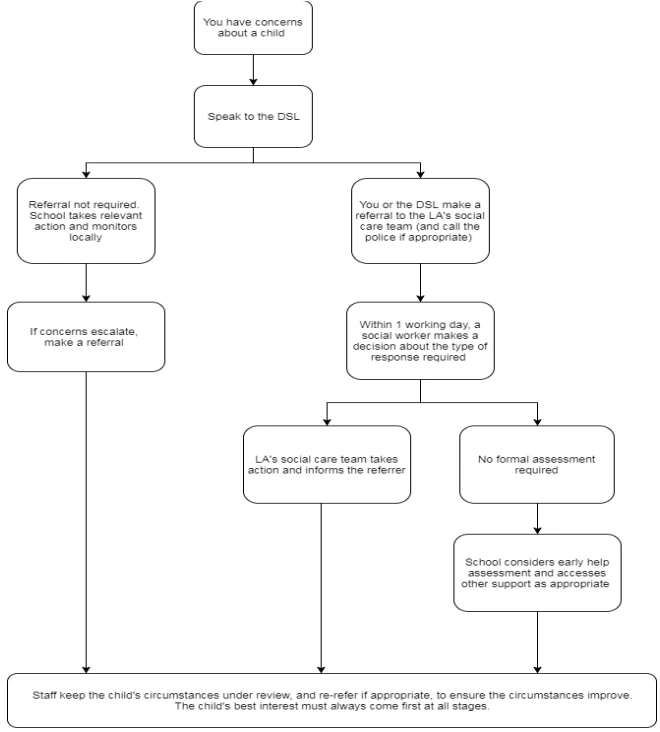
Figure 1 below, before section 7.7, illustrates the procedure to follow if you have any concerns about a child’s welfare. Where possible, speak to the DSL first to agree a course of action.
If in exceptional circumstances the DSL is not available, this should not delay appropriate action being taken. Speak to a member of the senior leadership team and/or take advice from local authority children’s social care. You can also seek advice at any time from the NSPCC helpline on 0808 800 5000. Share details of any actions you take with the DSL as soon as practically possible.
Make a referral to local authority children’s social care directly, if appropriate (see ‘Referral’ below). Share any action taken with the DSL as soon as possible.
At The Purple Elephant Project we are prepared to identify children who may benefit from early help. Early help means providing support as soon as a problem emerges at any point in a child’s life and aim to work with all professionals in this regard. In the first instance staff should discuss early help requirements with the DSL who will then liaise with other agencies as appropriate. Staff may be required to support other agencies and professionals in an early help assessment.
The DSL can take a case to the Early Help Resilience Network meeting to get multi-agency support if appropriate to do so and in conversation with other professionals such as the school the child attends.
If early help and/or other support is appropriate, the case will be kept under constant review and consideration given to a referral to children’s social care if the child’s situation doesn’t appear to be improving. The DSL is aware of the local escalation policy and procedures. We work closely with local professional agencies including education, social care, the police, health services and other services including voluntary organisations to promote the welfare of children and protect them from harm. This includes providing a co-ordinated offer of early help when additional needs of children are identified and contributing to inter-agency plans to provide additional support to children subject to child protection plans.
As part of meeting a child’s needs, our Board of trustees recognises the importance of sharing information between professionals and local agencies. The Data Protection Act 2018 and GDPR do not prevent the sharing of information for the purposes of keeping children safe. Fears about sharing information must not be allowed to stand in the way of the need to safeguard and promote the welfare and protect the safety of children.
If it is appropriate to refer the case to local authority children’s social care or the police, the DSL will make the referral or support you to do so.
If you make a referral directly (see section 7.1), you must tell the DSL as soon as possible.
The local authority will make a decision within 1 working day of a referral about what course of action to take and will let the person who made the referral know the outcome. The DSL or person who made the referral must follow up with the local authority if this information is not made available, and ensure outcomes are properly recorded.
If the child’s situation does not seem to be improving after the referral, the DSL or person who made the referral will follow local escalation procedures to ensure their concerns have been addressed and that the child’s situation improves.
If a child is not suffering or likely to suffer from harm, or in immediate danger, where possible speak to the DSL first to agree a course of action.
If in exceptional circumstances the DSL is not available, this should not delay appropriate action being taken. Speak to a member of the senior leadership team and/or seek advice from local authority children’s social care. Make a referral to local authority children’s social care directly, if appropriate (see ‘Referral’ above). Inform the DSL or deputy as soon as practically possible after the referral.
Where there is a concern, the DSL will consider the level of risk and decide which agency to make a referral to. This could include Channel, the government’s programme for identifying and supporting individuals at risk of being drawn into terrorism, or the local authority children’s social care team.
The DfE also has a dedicated telephone helpline, 020 7340 7264, which staff and trustees can call to raise concerns about extremism with respect to a child. You can also email [email protected]. Note that this is not for use in emergency situations.
In an emergency, call 999 or the confidential anti-terrorist hotline on 0800 789 321 if you:
Mental health problems can, in some cases, be an indicator that a child has suffered or is at risk of suffering abuse, neglect or exploitation. Staff will be alert to behavioural signs that suggest a child may be experiencing a mental health problem or be at risk of developing one.
Possible warning signs include:
If you have a mental health concern about a child that is also a safeguarding concern, take immediate action by following the steps in section 7.4.
If you have a mental health concern that is not also a safeguarding concern, speak to the DSL to agree a course of action.
The Purple Elephant Project aims to promote positive mental health for all staff and children we will ensure that staff, children and parents are made aware of the support available in charity and in the local community
(Note – if the DSL is unavailable, this should not delay action. See section 7.4 for what to do.)
If you have concerns about a member of staff (including a volunteer), or an allegation is made about a member of staff (including a volunteer) posing a risk of harm to children, speak to the CEO as soon as possible. If the concerns/allegations are about the CEO, speak to the chair of trustees.
The CEO/chair of trustees will then follow the procedures set out in appendix 2, if appropriate.
Where you believe there is a conflict of interest in reporting a concern or allegation about a member of staff (including a volunteer) to the CEO, report it directly to the local authority designated officer (LADO).
If you receive an allegation relating to an incident where an individual or organisation was using the Charity premises for running an activity for children, follow our safeguarding policies and procedures, informing the LADO, as you would with any safeguarding allegation.
We recognise that children are capable of abusing their peers. Abuse will never be tolerated or passed off as “banter”, “just having a laugh” or “part of growing up”, as this can lead to a culture of unacceptable behaviours and an unsafe environment for children.
Peer on peer abuse can include (but is not limited to):
In areas where gangs are prevalent, older children may attempt to recruit younger children using any or all of the above methods. Young people suffering from sexual exploitation themselves may be forced to recruit other young people under threat of violence.
We also recognise the gendered nature of child-on-child abuse. However, all child-on-child abuse is unacceptable and will be taken seriously. Our Child protection and safeguarding policy will apply to any allegations that raise safeguarding concerns. This might include where the alleged behaviour:
See appendix 3 for more information about child-on-child abuse.
If a child makes an allegation of abuse against another child:
We recognise the importance of taking proactive action to minimise the risk of child-on-child abuse, and of creating a supportive environment where victims feel confident in reporting incidents.
To achieve this, we will:
The Purple Elephant Project will act in accordance with guidance endorsed by DfE Sharing nudes and semi- nudes: how to respond to an incident
All incidents of sharing nudes and semi-nudes will be dealt with as safeguarding concerns. The primary concern at all times will be the welfare and protection of the young people involved.
Young people who share nudes and semi-nudes of themselves or their peers are breaking the law. However, as highlighted in national guidance, it is important to avoid criminalising young people unnecessarily. The Purple Elephant Project will therefore work in partnership with external agencies with a view to responding proportionately to the circumstances of any incident.
All incidents of sharing nudes and semi-nudes should be reported to the DSL as with all other safeguarding issues and concerns. Staff will not make their own judgements about whether an issue relating to sharing nudes and semi-nudes is more or less serious enough to warrant a report to the DSL. What may seem like less serious concerns to individual members of staff may be more significant when considered in the light of other information known to the DSL, which the member of staff may not be aware of.
If staff become concerned about a sharing nudes and semi-nudes issue in relation to a device in the possession of a child (e.g. mobile phone, tablet, digital camera), the member of staff will secure the device (it should be confiscated). This is consistent with DfE advice Searching, screening and confiscation (DfE July 2022)
The DSL will discuss the concerns with appropriate staff and speak to young people involved as appropriate. Parents and carers will be informed at an early stage and involved in the process unless there is good reason to believe that involving parents would put the young person at risk of harm.
If, at any point in the process, there is concern that a young person has been harmed or is at risk of harm, a referral will be made to SPA and/or the police immediately.
The police will always be informed when there is reason to believe that indecent images involve sexual acts and any child in the imagery is under 13 years of age.
The DSL will make a judgement about whether a reported sharing nudes and semi-nudes incident is experimental or aggravated. Aggravated incidents involve criminal or abusive elements beyond the creation, sending or possession of sexual images created by young people. These include possible adult involvement or criminal or abusive behaviour by young people such as sexual abuse, extortion, threats, malicious conduct arising from personal conflicts, or creation, sending or showing of images without the knowledge or against the will of a young person who is pictured.
Aggravated incidents of sharing nudes and semi-nudes will be referred to AfC’s Single Point of Access for advice about whether or not a response by the police and/or children’s social care is required.
This will facilitate consideration of whether:
Examples of aggravated incidents include:
The DSL will make a judgement about whether or not a situation in which nudes and semi-nudes have been shared with a small number of others in a known friendship group with no previous concerns constitutes an aggravated incident or whether the charity is able to contain the situation in partnership with all parents of the students involved, arrange for the parents to ensure that all indecent images are deleted and that the young people involved learn from the incident in order to keep themselves safe in future.
In the latter instance, the DSL will consult with the police and the SPA to check that no other relevant information is held by those agencies and to ensure an agreed response is documented before proceeding.
Staff should not view nudes and semi-nudes unless there is a good and clear reason to do so. Wherever possible, the DSL’s responses to incidents will be based on what they have been told about the content of the imagery. Any decision to view imagery will be based on the DSL’s professional judgement. Imagery will never be viewed if the act of viewing will cause significant distress or harm to a child. If a decision is made to view imagery, the DSL will be satisfied that viewing:
If it is necessary to view the imagery then the DSL will:
The DSL will make an immediate referral to police and/or children’s social care if:
If none of the above apply then the DSL, in consultation with the CEO and other members of staff as appropriate, may decide to respond to the incident without involving the police or children’s social care. The decision will be made and recorded in line with the procedures set out in this policy. The record- keeping arrangements set out in section 14 of this policy also apply to recording these incidents.
The DSL will inform parents/carers at an early stage and keep them involved in the process, unless there is a good reason to believe that involving them would put the child at risk of harm.
If the charity has decided that other agencies do not need to be involved, then consideration will be given to deleting imagery from devices and online services to limit any further sharing.
We recognise the importance of safeguarding children from potentially harmful and inappropriate online material, and we understand that technology is a significant component in many safeguarding and wellbeing issues.
To address this, our Charity aims to:
Our approach to online safety is based on addressing the following categories of risk:
This section summarises our approach to online safety and mobile phone use. For full details about our charity’s policies in these areas, please refer to our Acceptable Use Policy
Generative artificial intelligence (AI) tools are now widespread and easy to access. Staff, children and parents/carers may be familiar with generative chatbots such as ChatGPT and Google Bard.
The Purple Elephant Project recognises that AI has many uses, including enhancing learning, and in helping to protect and safeguard children. However, AI may also have the potential to facilitate abuse (e.g. bullying and grooming) and/or expose children to harmful content. For example, in the form of ‘deepfakes’, where AI is used to create images, audio or video hoaxes that look real.
The Purple Elephant Proejct will treat any use of AI to access harmful content or bully children in line with this policy.
Staff should be aware of the risks of using AI tools whilst they are still being developed.
Where appropriate, we will discuss any concerns about a child with the child’s parents or carers. The DSL will normally do this in the event of a suspicion or disclosure.
Other staff will only talk to parents or carers about any such concerns following consultation with the DSL.
If we believe that notifying the parents or carers would increase the risk to the child, we will discuss this with the local authority children’s social care team before doing so.
In the case of allegations of abuse made against other children, we will normally notify the parents or carers of all the children involved. We will think carefully about what information we provide about the other child involved, and when. We will work with the police and/or local authority children’s social care to make sure our approach to information sharing is consistent.
The DSL may, along with any relevant agencies (this will be decided on a case-by-case basis):
We recognise that children with special educational needs and disabilities (SEND) or certain health conditions can face additional safeguarding challenges, and are 3 times more likely to be abused than their peers. Additional barriers can exist when recognising abuse and neglect in this group, including:
We will be alert to the extra vulnerabilities these children may face due and any abuse involving these children will be reported immediately to the DSL.
If a child or young person has continence issues or intimate care needs, we will work with parents and carers to have access to their care plan. Children and young people with continence issues and intimate care needs should be treated with respect and supported to develop as much independence as possible.
Children may need a social worker due to safeguarding or welfare needs. We recognise that a child’s experiences of adversity and trauma can leave them vulnerable to further harm as well as potentially creating barriers to attendance, learning, behaviour and mental health.
The DSL and all members of staff will work with and support social workers to help protect vulnerable children.
Where we are aware that a child has a social worker, the DSL will always consider this fact to ensure any decisions are made in the best interests of the child’s safety, welfare and educational outcomes. This information will inform decisions about safeguarding and promoting welfare
The most common reasons for children becoming looked after is as a result of abuse and/or neglect. The Purple Elephant Project will ensure that staff have the necessary skills and knowledge to keep children looked after and previously looked after safe. Appropriate staff will have the information they need in relation to a child looked after’s legal status (for example, who has parental responsibility, who is not permitted to have contact and who is not permitted to have information disclosed about the child to them) and the level of authority delegated by the caring authority to the carer. This may also include details of children’s social workers and relevant virtual school heads
The CEO will;
We recognise that children who are (or who are perceived to be) lesbian, gay, bisexual or gender questioning (LGBTQ+) can be targeted by other children. We also recognise that LGBTQ+ children are more likely to experience poor mental health. Any concerns should be reported to the DSL.
When families/carers are making decisions about support for gender questioning pupils, they should be encouraged to seek clinical help and advice. This should be done as early as possible when supporting pre-pubertal children. When supporting a gender questioning child, we will take a cautious approach as
there are still unknowns around the impact of social transition, and a child may have wider vulnerability, such as complex mental health and psychosocial needs, and in some cases, autism spectrum disorder (ASD) and/or attention deficit hyperactivity disorder (ADHD).
We will also consider the broad range of their individual needs, in partnership with their parents/carers.
Risks can be compounded where children lack trusted adults with whom they can be open. We therefore aim to reduce the additional barriers faced and create a culture where children can speak out or share their concerns.
Published case reviews highlight that professionals sometimes lack the knowledge and confidence to work with families from different cultures and religions. This can lead to professionals overlooking situations that may put family members at risk; whilst the desire to be culturally-sensitive can result in professionals accepting lower standards of care. The learning from these reviews highlights that professionals need to take into account families’ cultural and religious context when undertaking assessments and offering support. The rights and needs of the child need to remain the focus of interventions at all times, regardless of this context. The following factors are taken from the NSPCC briefing: Culture and faith: learning from case reviews Summary of risk factors and learning for improved practice around culture and faith June 2014
Individuals who have a relationship with, or marry, someone outside their own religion or culture, may risk being cut off from, or ostracised by, their family, friends and the wider community. Couples who have children can end up socially isolated and without support networks to help them negotiate the challenges of parenting. In the most extreme cases, individuals from some cultures who act against their family’s wishes, may become the victims of honour-based violence.
Strong beliefs or a sense of honour or shame can prevent people from seeking or accepting the help they need. A strong cultural or religious belief in the sanctity of marriage may dissuade people from leaving their partners, even if they are violent. Many religions and cultures also have strong beliefs around sex outside marriage, making it very hard for young, unmarried, pregnant women to get the help they need.
Differences in culture or religion between partners, or between parents and children, may also make it more difficult for individuals to understand and support each other. Where one partner perceives their faith and heritage to be superior to, or more important than their partner’s, it can lead to a power imbalance and an erosion of the other partner’s self-esteem.
Where there are child protection concerns, some parents claim that their parenting practices are part of their cultural or religious beliefs. Parents may refuse to cooperate with services on cultural or religious grounds. They may accuse professionals of discriminating against them in an attempt to prevent intervention.
Many professionals lack knowledge about specific cultures and religions and do not feel confident in challenging harmful parenting practices. Professionals want to be respectful of families’ cultural and religious practices but the desire to be culturally sensitive can result in professionals accepting lower standards of care.
As children grow up, they become increasingly concerned with developing a sense of self. This can be particularly challenging for young people growing up in families with a different religious, cultural, or ethnic background to themselves (where for instance children are from different fathers or a child is living in foster care or has been adopted). Confusion over self-identity and a feeling of not belonging can lead to low self-esteem and heightened risk of self-harm or risk-taking behaviour. Some young people become involved in gangs to give themselves a sense of belonging.
Sometimes people convert to their partner’s religion. The new convert can be very reliant on their partner’s interpretation of and instruction into the beliefs and practices of the religion. The convert’s relative lack of knowledge places a great deal of power in their partner’s hands, which may be used to control and manipulate both the partner and their children.
In extreme cases children who are seen as “disobedient” or “different” are believed to be possessed by a spirit controlling their behaviour. The children can be physically and emotionally abused in an effort to exorcise the spirit.
Complaints against staff that are likely to require a child protection investigation will be handled in accordance with our procedures for dealing with allegations of abuse made against staff (see appendix 2).
The Purple Elephant Project has a whistleblowing policy which is available as a separate document. We recognise that children cannot be expected to raise concerns in an environment where staff fail to do so.
Our charity works hard to encourage a culture of mutual respect and learning. We welcome comments and feedback and provide staff, volunteers, children and parents with a safe mechanism to raise any concerns.
All staff should be aware of their duty to raise concerns, where they exist, about the management of child protection, which may include the attitude or actions of colleagues, poor or unsafe practice and potential failures in the charity’s safeguarding arrangements.
In the first instance this should be raised with the CEO, the DSL, and if necessary, will be escalated to the chair of trustees. If it becomes necessary to consult outside the charity, they should speak to the LADO for further guidance and support.
The NSPCC whistleblowing helpline is available for staff who do not feel able to raise concerns regarding child protection failures internally.
Staff can call: 0800 800 5000 or email: [email protected]
Whistleblowing issues regarding the CEO should be raised with the chair of trustees whose contact details are at the start of this policy.
We will hold records in line with our records retention schedule.
All safeguarding concerns, discussions, decisions made and the reasons for those decisions, must be recorded in writing. If you are in any doubt about whether to record something, discuss it with the DSL.
Records will include:
Any non-confidential records will be readily accessible and available. Confidential information and records will be held securely and only available to those who have a right or professional need to see them.
Safeguarding records relating to individual children will be retained for as long as we retain the child’s file under our record retention procedures.
Appendix 2 sets out our policy on record-keeping with respect to allegations of abuse made against staff.
All staff members and volunteers receive appropriate safeguarding and child protection training, including online safety, at induction, which is regularly updated at least annually, to ensure they understand the charity’s safeguarding systems and their responsibilities and to provide them with relevant skills and knowledge to safeguard children effectively. This includes training on how to recognise signs of abuse, exploitation or neglect, and how to respond to any concerns.
All staff attend yearly safeguarding update training and are required to undertake at least level 1 safeguarding training, including FGM every three years.
All staff will have training on the government’s anti-radicalisation strategy, PREVENT every three years, to enable them to identify children at risk of being drawn into terrorism and to challenge extremist ideas.
Staff will also receive regular safeguarding and child protection updates, including on online safety, as required but at least annually (for example, through emails, e-bulletins and staff meetings).
Therapists who have contact with children and families will have regular supervision which will provide them with support and coaching, promote the interests of children and allow for confidential discussions of sensitive issues. This will be in line with regulatory body requirements.
The DSL attends the multi-agency Local safeguarding partnership training within 12 weeks of taking up their responsibilities. The DSL undertakes level 3 refresher training on a yearly basis.
In addition, they will update their knowledge and skills at regular intervals and at least annually (for example, through e-bulletins, meeting other DSLs, or taking time to read and digest safeguarding developments).
They will also undertake Prevent awareness training.
The nominated safeguarding trustee undergo(es) appropriate safeguarding training prior to or as soon as appointment to the role and at regular intervals thereafter. All trustees receive safeguarding training as part of their induction and the local expectation is that it is refreshed every 3 years. This is to make sure that they:
The safety and wellbeing of the children we serve is of paramount concern to us. We are committed to a process of safer recruitment and therefore carry out the following steps during our recruitment processes:
Interviews will be conducted by a minimum of 2 people
At least 1 person conducting any interview for any post at the charity will have undertaken safer recruitment training, which is updated every three years.
This will cover, as a minimum, the contents of Keeping Children Safe in Education, and will be in line with local safeguarding procedures.
Our Recruitment Policy details more information about our safer recruitment procedures.
This policy will be reviewed annually by Jenny Haylock, CEO. At every review, it will be approved by the full Trustee board.
This policy links to the following policies and procedures:
Abuse including neglect, and safeguarding issues are rarely standalone events that can be covered by 1 definition or label. In most cases, multiple issues will overlap.
Physical abuse may involve hitting, shaking, throwing, poisoning, burning or scalding, drowning, suffocating or otherwise causing physical harm to a child. Physical harm may also be caused when a parent or carer fabricates the symptoms of, or deliberately induces, illness in a child.
Emotional abuse is the persistent emotional maltreatment of a child such as to cause severe and adverse effects on the child’s emotional development. Some level of emotional abuse is involved in all types of maltreatment of a child, although it may occur alone.
Emotional abuse may involve:
Sexual abuse involves forcing or enticing a child or young person to take part in sexual activities, not necessarily involving a high level of violence, whether or not the child is aware of what is happening. The activities may involve:
Sexual abuse is not solely perpetrated by adult males. Women can also commit acts of sexual abuse, as can other children.
Neglect is the persistent failure to meet a child’s basic physical and/or psychological needs, likely to result in the serious impairment of the child’s health or development. Neglect may occur during pregnancy as a result of maternal substance abuse.
Once a child is born, neglect may involve a parent or carer failing to:
It may also include neglect of, or unresponsiveness to, a child’s basic emotional needs.
The Purple Elephant Project has a whole charity approach to safeguarding and we promote an open and transparent culture in which all concerns about all adults working in or on behalf of the charity (including volunteers and contractors) are dealt with promptly and appropriately.
Despite all efforts to recruit safely, there may be occasions when allegations of abuse against children are reported to have been committed by staff, practitioners and/or volunteers, who work with children in our charity.
An allegation is any information which indicates that a member of staff, self-employed staff or volunteer may have:
This applies to any child the member of staff, self-employed staff or volunteer has contact with in their personal, professional or community life, as if they had child protection concerns raised for their own children.
To reduce the risk of allegations, all staff should be aware of safer working practice and should be familiar with the guidance contained in the staff handbook and the ‘Guidance for safer working practice for adults who work with children and young people in education settings’
Guidance about conduct and safe practice, including safe use of mobile phones by staff, will also be given at induction and is included in our AUP policy.
All charity staff should take care not to place themselves in a vulnerable position with a child. If a child is particularly vulnerable, therapy sessions may be recorded with prior consent.
We understand that a child may make an allegation against a member of staff or staff may have concerns about another staff member. If such an allegation is made, or information is received which suggests that a person may be unsuitable to work with children, the member of staff receiving the allegation or aware of the information, will immediately inform the CEO or DSL.
The CEO/DSL on all such occasions will discuss the content of the allegation with the local authority designated officer (LADO) within 24 hours and before taking any further action.
If the allegation made to a member of staff concerns the CEO, the person receiving the allegation will immediately inform the chair of trustees who will consult the LADO as above, without notifying the CEO first. Contact details for the chair of trustees can be found at the start of this policy.
Reporting to the LADO applies even where the nature of the alleged assault would not normally meet the threshold if applied to children in their own families. For example, a report of a child being smacked by a parent, with no injury caused, would be unlikely to require any response by police or Children’s Social Care. However, a similar report of a child being smacked by a professional should be responded to because of:
The Purple Elephant Project will follow the London child protection procedures for managing allegations against staff London child protection procedures; allegations and procedures set out in Keeping Children Safe in Education 2023
Suspension of the member of staff, against whom an allegation has been made, needs careful consideration, and the CEO will seek the advice of the LADO and an HR consultant in making this decision. All options to avoid suspension will be considered. In the event of an allegation against the CEO the decision to suspend will be made by the chair of trustees in consultation with the LADO and HR.
If an allegation pertains to another adult not employed directly by the charity, for example cleaning staff or a former member of staff, the charity will work directly with the LADO as described above.
We will ensure that all external agencies used are provided with details of the charity’s process for managing information.
Staff, parents and trustees are reminded that publication of material that may lead to the identification of an adult who is the subject of an allegation is prohibited by law. Publication includes verbal conversations or writing including content placed on social media sites.
There are procedures in place to make a referral to the Disclosure and Barring Service (DBS) if a person in a regulated activity has been dismissed or removed due to safeguarding concerns, or would have been had they not resigned. If an adult is dismissed due to serious misconduct or might have been dismissed had they not left first, consideration will be given as to whether to refer the case to the appropriate professional body e.g., BAPT.
After any cases where the allegations are substantiated, the case manager will review the circumstances of the case with the local authority’s designated officer to determine whether there are any improvements that we can make to the Charity’s procedures or practice to help prevent similar events in the future.
We will deal with all allegations as quickly and effectively as possible and will endeavour to comply with the following timescales, where reasonably practicable:
However, these are objectives only and where they are not met, we will endeavour to take the required action as soon as possible thereafter.
If an allegation is:
The Charity will make every effort to maintain confidentiality and guard against unwanted publicity while an allegation is being investigated or considered.
The case manager will take advice from the LADO, police and children’s social care services, as appropriate, to agree:
The case manager will maintain clear records about any case where the allegation or concern meets the criteria above and store them on the individual’s confidential personnel file for the duration of the case.
The records of any allegation that, following an investigation, is found to be malicious or false will be deleted from the individual’s personnel file (unless the individual consents for the records to be retained on the file).
For all other allegations (which are not found to be malicious or false), the following information will be kept on the file of the individual concerned:
We will retain all records at least until the accused individual has reached normal pension age, or for 10 years from the date of the allegation if that is longer.
When providing employer references, we will:
Abuse can be reported, no matter how long ago it happened.
We will report any non-recent allegations made by a child to the LADO in line with our local authority’s procedures for dealing with non-recent allegations.
Where an adult makes an allegation to the Charity that they were abused as a child, we will advise the individual to report the allegation to the police.
The term ‘low-level’ concern does not mean that it is insignificant, it means that the behaviour towards a child does not meet the threshold set out above. A low-level concern is any concern – no matter how small, and even if no more than causing a sense of unease or a ‘nagging doubt’ – that an adult working in or on behalf of the charity may have acted in a way that
Examples of such behaviour could include, but are not limited to
Such behaviour can exist on a wide spectrum, from the inadvertent or thoughtless, or behaviour that may look to be inappropriate, but might not be in specific circumstances, through to that which is ultimately intended to enable abuse.
We recognise the importance of creating a culture of openness, trust and transparency to encourage all staff to confidentially share low-level concerns so that they can be addressed appropriately.
We will create this culture by:
If the concern is raised via a third party, the CEO will collect evidence where necessary by speaking:
The CEO will use the information collected to categorise the type of behaviour and determine any further action, in line with the Charity’s staff code of conduct. The CEO will be the ultimate decision- maker in respect of all low-level concerns, though they may wish to collaborate with the DSL/ DDSL.
All low-level concerns will be recorded in writing. In addition to details of the concern raised, records will include the context in which the concern arose, any action taken and the rationale for decisions and action taken.
Records will be:
We will not include low-level concerns in references unless:
All adult-involved nude and semi-nude image sharing incidents are child sexual abuse offences and must immediately be referred to police/social care. However, as adult-involved incidents can present as child- on-child nude/semi-nude sharing, it may be difficult to initially assess adult involvement.
There are two types of common adult-involved incidents: sexually motivated incidents and financially motivated incidents.
In this type of incident, an adult offender obtains nude and semi-nudes directly from a child or young person using online platforms.
To make initial contact, the offender may present as themselves or use a false identity on the platform, sometimes posing as a child or young person to encourage a response and build trust. The offender often grooms the child or young person on social media, in chatrooms or on gaming platforms, and may then move the conversation to a private messaging app or an end-to-end encrypted (E2EE) environment where a request for a nude or semi-nude is made. To encourage the child or young person to create and share nude or semi-nude, the offender may share pornography or child sexual abuse material (images of other young people), including AI-generated material.
Once a child or young person shares a nude or semi-nude, an offender may blackmail the child or young person into sending more images by threatening to release them online and/or send them to friends and family.
Potential signs of adult-involved grooming and coercion can include the child or young person being:
Financially motivated sexual extortion (often known as ‘sextortion’) is an adult-involved incident in which an adult offender (or offenders) threatens to release nudes or semi-nudes of a child or young person unless they pay money or do something else to benefit them.
Unlike other adult-involved incidents, financially motivated sexual extortion is usually carried out by offenders working in sophisticated organised crime groups (OCGs) overseas and are only motivated by profit. Adults are usually targeted by these groups too.
Offenders will often use a false identity, sometimes posing as a child or young person, or hack another young person’s account to make initial contact. To financially blackmail the child or young person, they may:
The offender may demand payment or the use of the victim’s bank account for the purposes of money laundering.
Potential signs of adult-involved financially motivated sexual extortion can include the child or young person being:
Much of our work involves working from a school setting and therapists in particular must be aware of concerns relating to child absences.
A child being absent from education, particularly repeatedly, can be a warning sign of a range of safeguarding issues. This might include abuse or neglect, such as sexual abuse or exploitation or child criminal exploitation, or issues such as mental health problems, substance abuse, radicalisation, FGM or forced marriage.
There are many circumstances where a child may be absent or become missing from education, but some children are particularly at risk. These include children who:
Therapists should advise both school DSL and our DSL should you become concerned about a child’s absences, to support any identification of risks of abuse and neglect, including sexual exploitation, and to help prevent the risks of going missing in future. This includes informing the DSL if you become aware a child may leave the school without a new school being named.
Staff will be trained in signs to look out for and the individual triggers to be aware of when considering the risks of potential safeguarding concerns which may be related to being absent, such as travelling to conflict zones, FGM and forced marriage.
If a staff member suspects that a child is suffering from harm or neglect, we will follow local child protection procedures, including with respect to making reasonable enquiries. We will make an immediate referral to the local authority children’s social care team, and the police, if the child is suffering or likely to suffer from harm, or in immediate danger.
Child criminal exploitation (CCE) is a form of abuse where an individual or group takes advantage of an imbalance of power to coerce, control, manipulate or deceive a child into criminal activity, in exchange for something the victim needs or wants, and/or for the financial or other advantage of the perpetrator or facilitator, and/or through violence or the threat of violence.
The abuse can be perpetrated by males or females, and children or adults. It can be a one-off occurrence or a series of incidents over time, and range from opportunistic to complex organised abuse.
The victim can be exploited even when the activity appears to be consensual. It does not always involve physical contact and can happen online. For example, young people may be forced to work in cannabis factories, coerced into moving drugs or money across the country (county lines), forced to shoplift or pickpocket, or to threaten other young people.
Indicators of CCE can include a child:
If a member of staff suspects CCE, they will discuss this with the DSL. The DSL will trigger the local safeguarding procedures, including a referral to the local authority’s children’s social care team and the police, if appropriate.
Child sexual exploitation (CSE) is a form of child sexual abuse where an individual or group takes advantage of an imbalance of power to coerce, manipulate or deceive a child into sexual activity, in exchange for something the victim needs or wants and/or for the financial advantage or increased status of the perpetrator or facilitator. It may, or may not, be accompanied by violence or threats of violence.
The abuse can be perpetrated by males or females, and children or adults. It can be a one-off occurrence or a series of incidents over time, and range from opportunistic to complex organised abuse.
The victim can be exploited even when the activity appears to be consensual. Children or young people who are being sexually exploited may not understand that they are being abused. They often trust their abuser and may be tricked into believing they are in a loving, consensual relationship.
CSE can include both physical contact (penetrative and non-penetrative acts) and non-contact sexual activity. It can also happen online. For example, young people may be persuaded or forced to share sexually explicit images of themselves, have sexual conversations by text, or take part in sexual activities using a webcam. CSE may also occur without the victim’s immediate knowledge, for example through others copying videos or images.
In addition to the CCE indicators above, indicators of CSE can include a child:
If a member of staff suspects CSE, they will discuss this with the DSL. The DSL will trigger the local safeguarding procedures, including a referral to the local authority’s children’s social care team and the police, if appropriate.
Child-on-child abuse is when children abuse other children. This type of abuse can take place inside and outside of the child’s school. It can also take place both face-to-face and online, and can occur simultaneously between the 2.
Our charity has a zero-tolerance approach to sexual violence and sexual harassment. We recognise that even if there are there no reports, that doesn’t mean that this kind of abuse isn’t happening.
Child-on-child abuse is most likely to include, but may not be limited to:
Where children abuse their peers online, this can take the form of, for example, abusive, harassing, and misogynistic messages; the non-consensual sharing of indecent images, especially around chat groups; and the sharing of abusive images and pornography, to those who don’t want to receive such content.
If staff have any concerns about child-on-child abuse, or a child makes a report to them, they will follow the procedures set out in section 7 of this policy, as appropriate. In particular, section 7.8 and 7.9 set out more detail about our Charity’s approach to this type of abuse.
When considering instances of harmful sexual behaviour between children, we will consider their ages and stages of development. We recognise that children displaying harmful sexual behaviour have often experienced their own abuse and trauma, and will support them to receive appropriate support.
Children can witness and be adversely affected by domestic abuse and/or violence at home where it occurs between family members. In some cases, a child may blame themselves for the abuse or may have had to leave the family home as a result.
Types of domestic abuse include intimate partner violence, abuse by family members, teenage relationship abuse (abuse in intimate personal relationships between children) and child/adolescent to parent violence and abuse. It can be physical, sexual, financial, psychological or emotional. It can also include ill treatment that isn’t physical, as well as witnessing the ill treatment of others – for example, the impact of all forms of domestic abuse on children.
Anyone can be a victim of domestic abuse, regardless of gender, age, ethnicity, socioeconomic status, sexuality or background, and domestic abuse can take place inside or outside of the home. Children who witness domestic abuse are also victims.
Older children may also experience and/or be the perpetrators of domestic abuse and/or violence in their own personal relationships. This can include sexual harassment.
Exposure to domestic abuse and/or violence can have a serious, long-lasting emotional and psychological impact on children and affect their health, wellbeing, development and ability to learn.
Child on Parent Violence (CPV) — also known as Adolescent-to-Parent Violence and Abuse (APVA) — refers to a pattern of behaviour in which a child or young person uses verbal, emotional, financial, or physical abuse to gain control or power over a parent or carer. This behaviour goes beyond normal parent–child conflict or teenage frustration. It may include:
CPV is a form of abuse and a safeguarding matter. Both the child and the parent/carer may need protection and support. Staff should respond with empathy and refer to the DSL as a safeguarding concern.
Being homeless or being at risk of becoming homeless presents a real risk to a child’s welfare.
The DSL and deputy will be aware of contact details and referral routes into the local housing authority so they can raise/progress concerns at the earliest opportunity (where appropriate and in accordance with local procedures).
Where a child has been harmed or is at risk of harm, the DSL will also make a referral to children’s social care.
So-called ‘honour-based’ abuse (HBA) encompasses incidents or crimes committed to protect or defend the honour of the family and/or community, including FGM, forced marriage, and practices such as breast ironing.
Abuse committed in this context often involves a wider network of family or community pressure and can include multiple perpetrators.
All forms of HBA are abuse and will be handled and escalated as such. All staff will be alert to the possibility of a child being at risk of HBA or already having suffered it. If staff have a concern, they will speak to the DSL, who will activate local safeguarding procedures.
The DSL will make sure that staff have access to appropriate training to equip them to be alert to children affected by FGM or at risk of FGM.
Section 7.3 of this policy sets out the procedures to be followed if a staff member discovers that an act of FGM appears to have been carried out or suspects that a child is at risk of FGM.
Indicators that FGM has already occurred include:
Potential signs that a child may be at risk of FGM include:
The above indicators and risk factors are not intended to be exhaustive.
Forcing a person into marriage is a crime. A forced marriage is one entered into without the full and free consent of 1 or both parties and where violence, threats, or any other form of coercion is used to cause a person to enter into a marriage. Threats can be physical or emotional and psychological.
It is also illegal to cause a child under the age of 18 to marry, even if violence, threats or coercion are not involved.
We are aware of the ‘1 chance’ rule, i.e. we may only have 1 chance to speak to the potential victim and only 1 chance to save them.
If a member of staff suspects that a child is being forced into marriage, they will speak to the child about their concerns in a secure and private place. They will then report this to the DSL.
The DSL will:
Human trafficking, is defined in the UN Protocol on trafficking, adopted in 2000, as the acquisition of a person, by means of deception or coercion, for the purposes of exploitation. Human trafficking, or modern slavery as it is often referred to, is a crime and a safeguarding issue affecting millions across the world and in the United Kingdom. Staff at The Purple Elephant Project are alert to the existence of modern slavery and child trafficking and concerns will be recorded and reported to SPA as appropriate.
Examples of industries and services where slavery exist in the UK today, the victims of which include children and young people are:
Modern slavery is an issue that transcends age, gender and ethnicities. It can include victims that have been brought to the UK from overseas or vulnerable people in the UK being forced illegally to work against their will. Children and young people have an increased vulnerability to slavery. Poverty, limited opportunities at home, lack of education, unstable social and political conditions and war are some of the situations that contribute to trafficking of victims and slavery. Slavery can be linked to a number of safeguarding issues, including child sexual exploitation, but normally includes at least one of the following specific situations.
Possible signs and indicators that someone is a victim of modern slavery that anyone working with children and young people should be aware of include:
If a member of The Purple Elephant Project staff suspects that a child may be a victim they will, in the first instance, report their concerns to the DSL. The DSL will seek advice and support from SPA who may in turn make a referral to the National Crime Agency via the National Referral Mechanism (NRM).
Further advice can be provided directly by the modern slavery helpline on 0800 012 1700.
The use or threat of terrorism must be designed to influence the government or to intimidate the public and is made for the purpose of advancing a political, religious or ideological cause.
We all have a duty to prevent children from being drawn into terrorism. The DSL will undertake Prevent awareness training and make sure that staff have access to appropriate training to equip them to identify children at risk.
We will assess the risk of children in our Charity being drawn into terrorism and will ensure that suitable internet filtering is in place, based on an understanding of the potential risk in our local area, in collaboration with our local safeguarding partners and local police force.
There is no single way of identifying an individual who is likely to be susceptible to an extremist ideology. Radicalisation can occur quickly or over a long period.
Staff will be alert to changes in children’s behaviour.
The government website Educate Against Hate and charity NSPCC say that signs that a child is being radicalised can include:
Children who are at risk of radicalisation may have low self-esteem or be victims of bullying or discrimination. It is important to note that these signs can also be part of normal teenage behaviour – staff should have confidence in their instincts and seek advice if something feels wrong.
If staff are concerned about a child, they will follow our procedures set out in section 7.5 of this policy, including discussing their concerns with the DSL.
Staff should always take action if they are worried.
Sexual violence and sexual harassment can occur:
Sexual violence and sexual harassment exist on a continuum and may overlap.
Children who are victims of sexual violence and sexual harassment will likely find the experience stressful and distressing. This will likely adversely affect their educational attainment and will be exacerbated if the alleged perpetrator(s) attends the same school.
If a victim reports an incident, it is essential that staff make sure they are reassured that they are being taken seriously and that they will be supported and kept safe. A victim should never be given the impression that they are creating a problem by reporting any form of abuse or neglect. Nor should a victim ever be made to feel ashamed for making a report.
When supporting victims, staff will:
Some groups are potentially more at risk. Evidence shows that girls, children with SEN and/or disabilities, and lesbian, gay, bisexual and transgender (LGBT) children are at greater risk.
Staff should be aware of the importance of:
If staff have any concerns about sexual violence or sexual harassment, or a child makes a report to them, they will follow the procedures set out in section 7 of this policy, as appropriate. In particular, section 7.8 and 7.9 set out more detail about our Charity’s approach to this type of abuse.
Indicators which may signal that a child is at risk from, or involved with, serious violent crime may include:
Risk factors which increase the likelihood of involvement in serious violence include:
Staff will be aware of these indicators and risk factors. If a member of staff has a concern about a child being involved in, or at risk of, serious violence, they will report this to the DSL.
The Purple Elephant Project has a whole charity approach to online safety, which protects and educates children and staff in their use of technology and establishes mechanisms to identify, intervene in, and escalate any concerns where appropriate.
Children and young people commonly use electronic equipment including mobile phones, tablets and computers on a daily basis to access the internet and share content and images via social networking sites such as Facebook, TikTok, Twitter, MSN, Tumblr, Snapchat, Instagram and gaming platforms.
Those technologies and the internet are a source of fun, entertainment, communication and education. Unfortunately, however, some adults and young people will use those technologies to harm children.
The breadth of issues classified within online safety is considerable and ever evolving, but can be categorised into four areas of risk:
Content: being exposed to illegal, inappropriate, or harmful content, for example: pornography, racism, misogyny, self-harm, suicide, antisemitism, radicalisation, extremism, misinformation, disinformation (including fake news) and conspiracy theories.
Contact: being subjected to harmful online interaction with other users; for example: peer to peer pressure, commercial advertising and adults posing as children or young adults with the intention to groom or exploit them for sexual, criminal, financial or other purposes.
Conduct: online behaviour that increases the likelihood of, or causes, harm; for example, making, sending and receiving explicit images (e.g. consensual and non-consensual sharing of nudes and semi- nudes and/or pornography, sharing other explicit images and online bullying.
Commerce: risks such as online gambling, inappropriate advertising, phishing and or financial scams. These risks will be reported to the Anti-Phishing Working Group (APWG)
Children and adults who are affected by these areas will be supported through the charity’s safeguarding procedures.
Suicide: an act of deliberate self-harm which results in death.
Self-harm: self-poisoning or self-injury, irrespective of the apparent purpose of the act.
Self-harm is generally a way of coping with overwhelming emotional distress. Many young people self- harm where there is no suicidal intent. However, research shows that young people who self-harm can be at a higher risk of suicide. Self-harm is a coping mechanism that enables a person to express difficult emotions. Young people who hurt themselves often feel that physical pain is easier to deal with than the emotional pain they are experiencing, because it is tangible. But the behaviour only provides temporary relief and fails to deal with the underlying issues that a young person is facing. For some people, self- harm may last for a short time. For others, it can become a long-term problem. Some people self-harm, stop for a while, and return to it months, even years, later, in times of distress.
Risk factors that indicate a child or young person may be at risk of taking actions to harm themselves or attempt suicide can cover a wide range of life events such as bereavement; bullying; online bullying; mental health problems including eating disorders; family problems such as domestic violence; or any form of abuse or conflict between the child and parents.
The most common forms of self-harm are:
Self-harm is usually a secretive behaviour but signs may include:
The Purple Elephant Project recognises that any child who self-harms or expresses thoughts about self- harm and/or suicide must be taken seriously and appropriate help and intervention will be offered at the earliest point. Any member of staff who is made aware that a child has self-harmed, or is contemplating self-harm or suicide, will record and report the matter to the DSL as soon as possible as with any other safeguarding concern and families will be supported to develop a safety plan.
Staff at The Purple Elephant Project are alert to the issues surrounding fabricated or induced illnesses. Fabricated or induced illness (FII) is a rare form of child abuse. It happens when a parent or carer, usually the child’s biological mother, exaggerates or deliberately causes symptoms of illness in the child.
There are many ways that the parent/carer may fabricate (make up or lie about) or induce illness in a child:
The very presence of an illness can act as a stimulus to the abnormal behaviour and also provide the parent with opportunities for inducing symptoms.
Fabricated or induced illness is most commonly identified in younger children. Although some of these children die, there are many that do not die as a result of having their illness fabricated or induced, but who suffer significant long term physical or psychological health consequences. Fabrication of illness may not necessarily result in a child experiencing physical harm, but there may be concerns about the child suffering emotional harm. They may suffer emotional harm and/or disturbed family relationships as a result of an abnormal relationship with their parent.
Staff at The Purple Elephant Project will record and report any concerns about a child who might be experiencing fabricated or induced illness to the DSL as with any other safeguarding concern. The DSL will consider the need to make a referral or consult with the Single Point of Access as with any other child protection concern.
The Royal College of Paediatrics and Child Health (RCPCH) has issued updated guidance:
https://childprotection.rcpch.ac.uk/resources/perplexing-presentations-and-fii/
All visitors will be required to verify their identity to the satisfaction of staff. If the visitor is unknown to the setting, we will check their credentials and reason for visiting before allowing them to enter the setting.